Scientists are investigating whether a warming Arctic is changing the behavior of the polar vortex, a natural atmospheric phenomenon responsible for recent waves of intense cold air.
Researchers are focused on how rising temperatures at the North Pole may be disrupting the vortex and allowing arctic air to spill into lower latitudes. For weeks, temperatures were locked below normal across many regions.
It may not feel like it, but global warming still plays a role, even in a winter this cold. The atmosphere is connected–when one part changes, it can influence everything else.
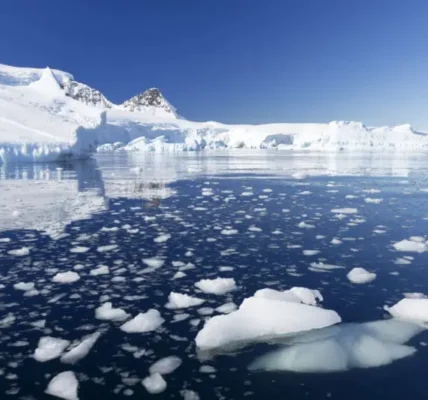
“This is called arctic amplification. The Arctic is warming about three to four times faster than the rest of the globe,” said Frank Nocera, a meteorologist with the National Weather Service and National Oceanic and Atmospheric Administration. “Well, sea ice reflects a lot of sun. It has a high albedo, so if you melt that ice, then the ocean is able to absorb more heat, and that extra heat accelerates warming.”
The temperature difference between the Arctic and the tropics is typically at its strongest during the winter months. However, as the North Pole warms faster than lower latitudes, that contrast can begin to weaken.
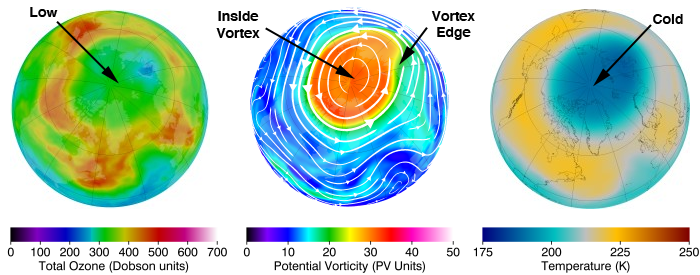
Scientists say this weakening may influence the strength of the polar vortex, which acts as a barrier for cold air. When the vortex is disrupted, the jet stream can turn more amplified, allowing frigid air to spill south into North America.
Andrea Lang, an atmospheric and oceanic professor at the University of Wisconsin, noted that these surges are simply becoming less common as the background climate shifts.
“It’s less frequent that we see these huge, intense, cold air surges coming from the Arctic,” Lang said. “It can still happen as the climate and the background planet are warming. It doesn’t get rid of them altogether, but it’s very unlikely that we’re gonna have two years like this back to back.”
These atmospheric changes are occurring alongside a broader trend of rising global temperatures. In 2024, the global average temperature was approximately 15 degrees Celsius, or 59 degrees Fahrenheit. This figure is about 1.3 degrees Celsius above the 20th-century average and roughly 1.5 degrees Celsius above pre-industrial levels.