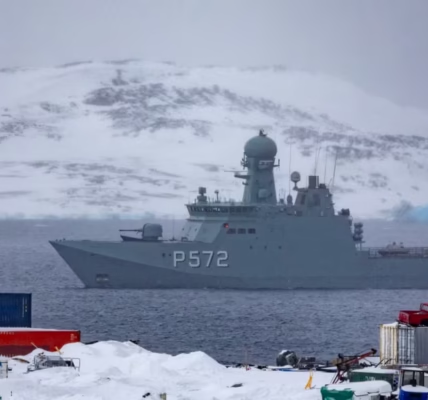
President Putin sees Greenland as a testing ground for his vision of a world divided into spheres of influence, in which the United States and Russia set the rules of the game.
President Trump’s dramatic claim to Greenland spiralled into an unprecedented crisis for the trans-Atlantic alliance. Although Trump appeared to backtrack on his intention to annex the Danish territory and, in his speech in Davos on 21 January 2026, promised that he would not resort to military means to press his claims, the crisis left a bitter aftertaste. For many Europeans, it highlighted Trump’s fickleness and America’s general unreliability. It raised questions about the credibility of US security guarantees and the future of NATO. And – seeing how Trump sometimes allows an issue to drop only to come back at it with a vengeance – there is no telling when or how Greenland might yet resurface to menace the struggling alliance.
Meanwhile, if there has been one beneficiary of the unexpected crisis, it is Russia. Vladimir Putin welcomed Trump’s unrequited love for Greenland like a gift from the gods. Unconcerned that the US president justified his claims specifically with reference to Russia’s (and China’s) alleged interest in Greenland, Putin not just encouraged Trump in every way, but also offered characteristically bizarre justifications for the possible annexation.
In doing so, Putin pursued two goals. First, he thought that the Greenland case could be a landmark for testing his own understanding of ‘spheres of influence’. Second, he was keenly aware that the crisis would cause frictions in NATO or, if things really went haywire, bring it to ruin. And killing NATO has long been one of Putin’s fondest aspirations.
The idea of dividing the world into spheres of influence isn’t Russian per se – it’s an old and tired feature of European imperialism. But it holds a greater purchase in Russia than practically anywhere else because, unlike its former European rivals, Russia has never outgrown an imperial mindset, even if it shed substantial portions of its former empire between 1989 and 1991.
The collapse of the Soviet Bloc and the fragmentation of the Soviet Union could have served as a moment of post-imperial reckoning, but it didn’t. Russia not only retained elements of its empire (for example, its possessions in the Caucasus) but also an ambition to rule unchallenged over what it termed its ‘near abroad’, i.e. the former republics of the Soviet Union.
Already in the 1990s, when it briefly seemed that Russia could, after all, make a safe transition to docile democracy, the Kremlin tried to veto NATO’s eastern enlargement into what it still perceived as Russia’s ‘sphere’ in Eastern Europe. Boris Yeltsin regarded NATO’s enlargement as ‘nothing but humiliation’, but, in its weakened state, Russia was in no position to do anything about it.
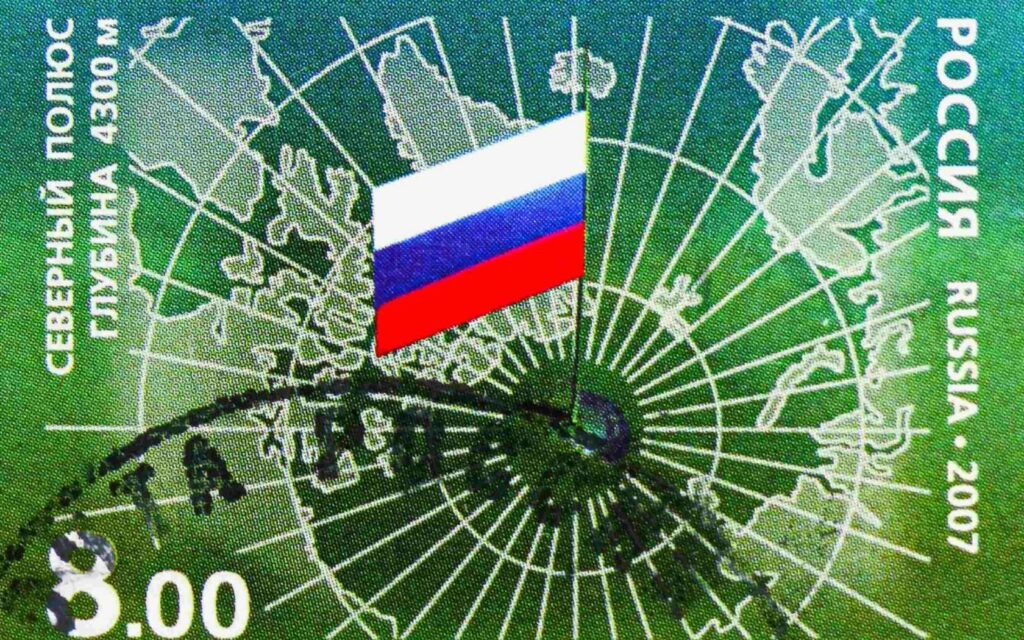
Putin’s presidency began with pledges to ‘raise Russia from its knees’. This included an ever-closer relationship with Ukraine, which was a key piece in the Kremlin’s post-Soviet re-integration schemes. Putin flexed the economic muscle and relied on his control of Ukraine’s gas supplies to support pro-Russian political forces in the country. His efforts backfired – not once, but several times. In 2004-2005, the Russian president saw a pliable candidate, Viktor Yanukovych, defeated by a pro-Western Viktor Yushchenko. In 2014, the same Yanukovych fled Ukraine in the wake of popular protests, leading to Russia’s annexation of Crimea in March 2014 and, in February 2022, to a full-scale invasion of Ukraine.
This invasion was underpinned by Putin’s expectation – which turned out to be badly off – that the West, for all of its alleged efforts to ‘detach’ Ukraine from Russia, implicitly recognised Ukraine as a part of Russia’s sphere, or that it would have to, once faced with a fait accompli. In the event, neither turned out to be the case. Ukraine’s survival in the immediate weeks after the Russian invasion set the stage for a contestation over what the Russians regarded as their legitimate sphere; crucially, neither Ukraine nor its western partners were willing to accept the Kremlin’s understanding of what constituted Russia’s sphere of influence.
President Trump’s re-election in November 2024 fed hopes in the Kremlin that the United States could be persuaded to reconsider its entire Ukraine policy as a part of a broader US turn away from Europe. If America’s core interests were elsewhere – for example, in containing China in East Asia – then perhaps Washington would accept a Ukrainian settlement that would leave this country in the Russian sphere. Trump’s evident dislike for President Volodymyr Zelensky and his generally transactional attitude to friend and foe alike fed Putin’s hopes that he could strike a bargain with the American president not altogether dissimilar from what the Soviet leader Joseph Stalin had once struck with British Prime Minister Winston Churchill.
In October 1944, Churchill flew to Moscow for talks with Stalin, with Greece very much on his mind. He wanted to make sure that Great Britain would remain in control there, and that the Soviets would stay out – that they would not support the Greek Communists in their bid to wrestle political power from the British-backed government in Athens. So keen was Churchill to keep Stalin at bay that he offered him a deal: Great Britain and the Soviet Union would divvy up influence in South-eastern Europe, with each country being assigned ‘percentages’ of British or Soviet influence.
Greece was to be 90 per cent British (‘in accord w USA’, as Churchill specified), while the Russians would get 90 per cent of Romania, and so on down the list.
Churchill infamously handed the piece of paper with the ‘percentages’ table to Stalin, who ticked it before passing it back. The prime minister recalled what happened next. ‘At length I said, “Might it not be thought rather cynical if it seemed we had disposed of these issues, so fateful to millions of people, in such an offhand manner? Let us burn the paper.” “No, you keep it”, said Stalin.’
Churchill’s approach to spheres of influence was completely in line with the methods of 19th-century imperialism, and it was an approach that Stalin fully shared. It was the United States that was the odd one out, which was why it was left out of these discussions, notwithstanding Churchill’s hypocritical comment about being ‘in accord w USA’.
The American approach to the world was radically at odds with what Churchill and Stalin envisioned for the postwar era. In a more charitable view, it entailed the rejection of spheres of influence as such: the whole world was to be free and open. A less sanguine interpretation (one Stalin undoubtedly embraced) was that behind America’s anti-imperialist stand lurked a certain ambition to bring the entire world within the ‘American sphere’. In this interpretation, the United States would retain its sphere in the Americas, in line with the Monroe Doctrine, while projecting power and influence into Moscow’s own backyard. In other words, ‘What’s mine is mine; what’s yours is subject to negotiation.’
It is not too far-fetched to describe the Cold War as arising, in large part, from a clash between Soviet and US visions of their respective spheres of influence in Eastern Europe. Yet Washington eventually came around to accepting the Soviet sphere, at least implicitly, and did practically nothing to help Hungary when it rebelled against Soviet rule in 1956, or Czechoslovakia, when the Soviets brought down the fist in 1968. In a nuclear world, it was, in the American reading, the sensible and responsible thing to do.
That was the kind of self-imposed reticence that Putin counted on when he invaded Ukraine. Only, he misjudged both Ukraine and its western partners. Or did he?
What if President Joe Biden’s approach to Ukraine was just an aberration? Even Biden, for all his vows of support, trod with great care in Ukraine, fearing escalation. There was every reason to think that Trump not only shared Biden’s fears about Russia, but that he would also not be averse to striking imperial deals with the Kremlin. If, in 1944, Stalin was prepared to give away Greece, presently Putin was ready to surrender Greenland.
True, unlike Stalin, who actually had levers of influence in Greece, Putin had none in Greenland, never mind Trump’s fantasies about the Russian (or the Chinese) threats to the island. Still, Putin appeared willing to offer his recognition of American claims, hinting that, in return, he would very much expect America’s reciprocal recognition of Russian claims to Ukraine.
Unsurprisingly, given his frequently misplaced obsession with history, Putin approached the problem from an historical perspective. In his very first comment on Trump’s claims to Greenland (in March 2025), he went back to mid-19th century to argue that the United States had a long-standing interest in the island. Putin went on to discuss how this interest waxed and waned in the 20th century, concluding that ‘these [US] plans have old and, as I just showed, historical roots and, evidently, the US will continue, on a systemic basis, pursuing their geostrategic, military-political, and economic interests in the Arctic’.
The obvious message here was that Russia, too, had been pursuing its geo-strategic, military-political, and economic interests when it invaded Ukraine, and, if anything, these interests went much further back than the 19th century and had roots in that murky past when Russia and Ukraine were, according to Putin’s infamous observation, ‘a single people’.
Putin returned to his historical mode in January 2026, once again to justify Washington’s interest in Greenland. Mindful of Trump’s repeated references to the prospect of the American purchase of Greenland, he even came up with a price. According to the Russian president, the island was worth anywhere between 200 million to 1 billion US dollars. Such an absurdly low price was justified, in Putin’s view, by how much the United States paid Russia for Alaska in 1867. It was Putin’s way of both signalling resentment at (allegedly) being historically mistreated by the United States, and of giving Trump subtle encouragement to drive a hard bargain with the Danes, who are evidently much less of a great power that Russia was in 1867, and so much less capable of resisting Washington’s offers.
While Putin made only an implicit comparison between Ukraine and Greenland, Foreign Minister Sergei Lavrov has been very explicit. In a long, rambling speech on 20 January 2026, he claimed that Russia had an even greater claim to Crimea on security grounds than the United States had to Greenland. Predictably, he also accused the West (in particular, the Europeans) of hypocrisy for not respecting ‘self-determination’ of eastern Ukraine while insisting on Greenland’s self-determination.
One of the most curious aspects of Moscow’s support for the American annexation of Greenland is that, in Trump’s telling at least, the United States would like to turn the island into a crucial platform for its anti-ballistic missile (ABM) defense. The Kremlin had never been very enthusiastic about ABM, and Putin had fought pitched battles with the Americans over the placement of US missile interceptors in Europe. For all of Putin’s claims that no ABM system would ever protect America from an overwhelming Russian strike, the development of these systems still impairs Russia’s ability to threaten the United States and thus lessens the value of Putin’s nuclear deterrent.
Putin himself has not issued clear pronouncements on this matter, but broader discussions in the Russian policy community suggest that few in Moscow would have any doubts that, if Trump wanted to upgrade US capabilities in Greenland, he could do this even with the Danes in nominal control. The United States does not need to ‘own’ Greenland to maintain a substantial military presence there. In fact, it already does (i.e. at the Pituffik Space Base). It is not difficult to imagine Denmark agreeing to practically any extension of this military presence.
Meanwhile, according to Vladimir Dzhabarov, deputy head of the international relations committee of Russia’s Federation Council, a US takeover of Greenland would have the positive effect of reducing the number of players in the Arctic. ‘It would be good’, Dzhabarov argued, ‘if there were just the solid players like Russia and the United States of America. When the British and others get involved there, it never ends well… I think it’s better to conduct negotiations with the Americans than when it’s unclear what one should expect, and from whom… It’ll be easier when two great powers agree on the rules of the game in the sphere of anti-missile defense… This is not such a bad scenario.’
Dzhabarov is not Putin, and so his sanguine calls for US control of Greenland do not necessarily reflect the Kremlin’s position. But they do speak to the Russian ambition for a great power concert of two in the Arctic, where the United States and Russia would set the rules of the game, and keep the other players at bay. This ambition, one might even call it an obsession, trumps immediate strategic interests like concern over anti-missile defense, which in any case Moscow has little recourse to do anything about.
Nonetheless, the spectacular spat over Greenland is ultimately resolved, and Moscow has benefited already from the crisis of trust within NATO. Breaking up NATO has been a long-standing ambition of the Kremlin’s with roots extending through the Cold War to the very creation of the North Atlantic Alliance. This is understandable, since containing Russia has been NATO’s raison d’être from the very beginning. Unfortunately for the Soviet and then Russian leaders, their own bellicosity and aggressive foreign policy have helped NATO’s consolidation. Putin’s full-scale invasion of Ukraine unarguably helped strengthen NATO, including by adding two militarily very capable members to the alliance.
Against this backdrop, the quarrel over Greenland was a real break for Putin. On the one hand, it distracted attention from his ongoing invasion of Ukraine – a state of affairs particularly visible at Davos, which was dominated by concerns over Greenland. On the other hand, it raised uncomfortable questions over the meaning of US security guarantees to its European allies. Putin’s spokesman Dmitrii Peskov called the situation ‘disquieting’. ‘We are watching it very closely’, he added. But this ‘disquiet’ hides feelings bordering on joy: could Greenland finally break NATO? ‘There are now such discussions around [Greenland], which would have been unimaginable previously’, Lavrov commented, ‘including the prospects of maintaining NATO as a unified Western military-political bloc.’
In other words, whatever the outcome of the dispute, Moscow stands to benefit. Putin has an objective interest in a widening transatlantic rift. It is for this reason, if no other, that he has chosen to support Trump’s claims to Greenland. And it was unwelcome news to him that the US president, for now at least, decided to back away from his maximalist demands, choosing instead the road of negotiations.
One of Stalin’s worst mistakes was to overestimate the prospects for what he perceived as inevitable ‘imperialist’ rivalry. He thought that after the end of the Second World War the United States and Great Britain would quarrel over the spoils and, driven by insatiable capitalist expansionism, clash over access to colonies and markets, leaving the Soviet Union space for extending its influence throughout Europe. Stalin’s expectations proved entirely misplaced when it turned out that the United States and Great Britain would cooperate and, moreover, work together in containing Soviet expansionism.
Putin may not have the same preoccupation with Marxist-Leninist views of capitalist competition, but he seems to be just as hopeful as Stalin had been in his time that the West will quarrel, fracture, and finally fall apart. It remains to be seen whether Putin is a better prophet than Stalin.
Source – https://engelsbergideas.com/essays/russias-arctic-game/