Reuters reported on March 2 that investor interest in the Greenlandic mining sector has increased following US President Donald Trump’s renewed threats about annexing the island. Greenland’s Minister for Business and Mineral Resources, Naaja H. Nathanielsen, stated that interest has mainly come from companies and investors based in the United Kingdom, Canada, and the European Union. (Reuters)
Rising international interest in Greenland’s mining sector reflects the growing strategic importance of critical minerals. Yet this attention risks obscuring the reality that Greenland’s mining industry remains limited. Despite hosting large mineral deposits, the island currently has only a small number of operating mines. The gap between geological potential and actual extraction highlights the structural challenges facing resource development in Greenland and the wider Arctic.
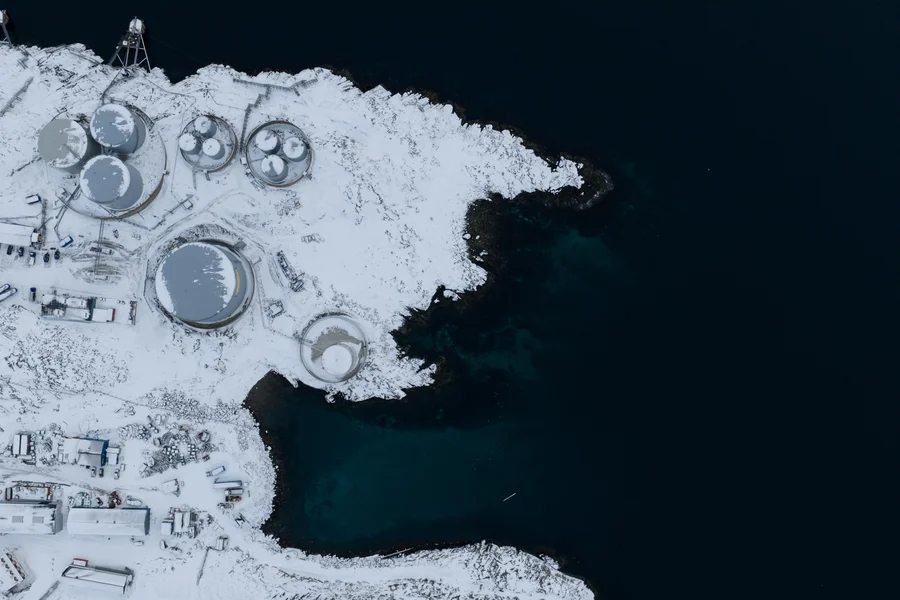
Many potential sites are located in remote regions with limited to no road coverage, ports or energy supply. Greenland, for instance, only has about 150 kilometers of road, of which around half are paved. Consequently, companies often need to build transport networks, power generation facilities, and housing for workers before any extraction work can begin. Mining projects in the High North thus require enormous upfront investments. In addition to logistical barriers, Greenland’s geology presents unique technical challenges.
Unlike many rare earth deposits elsewhere in the world, where minerals often occur in phosphate or carbonate formations, Greenland’s rare earth elements are often contained in silicate minerals. These deposits tend to have lower concentrations of minerals and require more complex chemical processing, which significantly increases costs. These constraints explain why Greenland’s vast mineral potential has not yet translated into a robust mining industry.
Turning the island’s resources into functioning supply chains will thus require long-term investment in infrastructure, technological innovation, and careful consideration of environmental and social impacts. (Reuters, Scientific American, Yale Environment360)
Source – https://www.thearcticinstitute.org/arctic-week-take-five-week-2-march-2026/