The following conversation was recorded on December 11, 2025, and has been edited for clarity. You can listen to the conversation here.
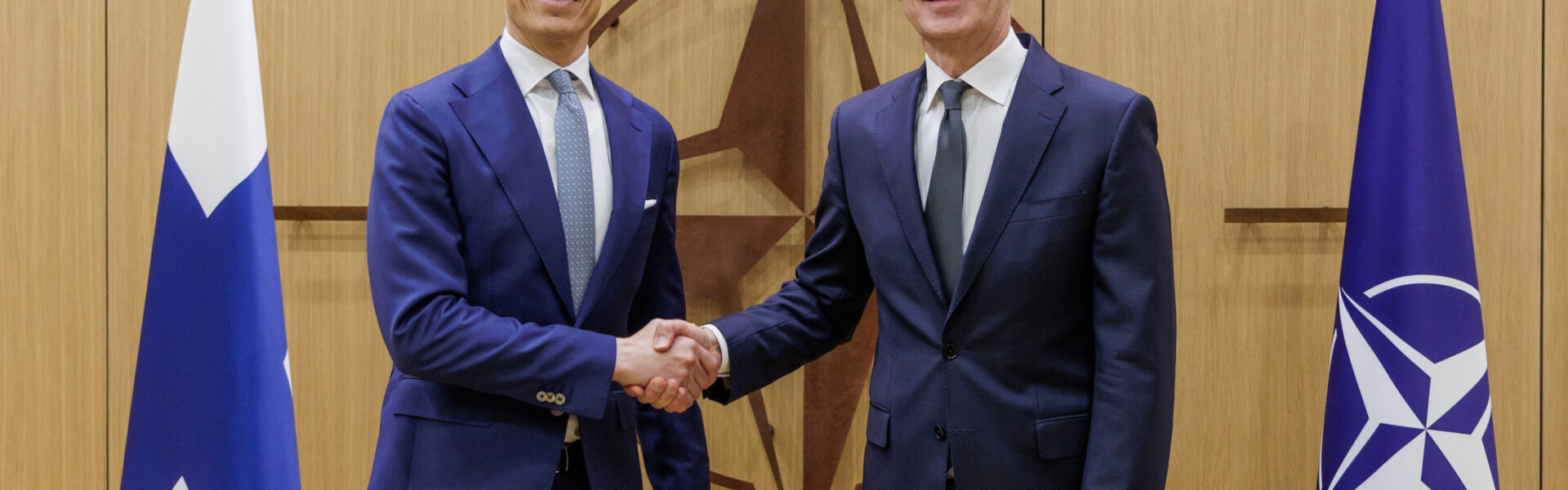
Natalia Kopytnik: My guest today is Joel Linnainmäki. He’s a research fellow at the Finnish Institute of International Affairs, where his work focuses on Finnish foreign policy, northern European security, and NATO affairs. Previously, he worked as a special advisor to the Minister of Foreign Affairs, Pekka Haavisto, who oversaw Finland’s NATO accession. Joel, thanks so much for joining us today on The Ties That Bind.
Joel Linnainmäki: Thanks for having me, and greetings from Helsinki.
NK: I hope it’s warmer there than it is here, but probably not.
JL: It could be actually a little colder because then we would have snow in Helsinki, and that’s better than the eternal darkness of November.
NK: So you worked as a special advisor to the former Minister of Foreign Affairs, who, of course, was the foreign minister when Finland was joining NATO: 2022 to 2023. Let’s start there.
What was it like to witness Finland’s change of its decades-long policy on both Russia and NATO? Walk us through the time, how you saw that from a personal perspective, and how you saw that process play out in your role.
JL: I’ll just start by noting that the first six months of our government term in 2019, so before our NATO membership process and the full-scale invasion by Russia of Ukraine, we had the EU presidency.
Then we had a change of prime ministers from Antti Rinne to Sanna Marin, whom some of your listeners might have heard of, who just wrote a book about her term as the youngest prime minister of Finland. And then we had COVID. So, I often felt that the times were a bit too historic already before the full-scale invasion and our accession process. But of course, things intensified in a major way in February of 2022.
But what actually happened is that, of course, as we all know, the United States was warning the Ukrainians and warning the European allies and partners that Russia was mobilizing forces near Ukraine’s borders.
So, many countries in Europe, [including] Finland started to prepare for the possibility of an invasion already before it happened in February. We had intergovernmental meetings already in December, thinking about possible sanctions on Russia and how we would change our military posture and whatnot.
But then the big change happened almost overnight in public sentiment in Finland, because we were a very pragmatic and security-oriented country. Finns felt that the way we had approached our security and strategic position in Europe no longer would work to secure Finland’s democracy and freedom and sovereignty and future. So, they shifted their position from overwhelmingly being against NATO membership to overwhelmingly supporting NATO membership. That was the big change that happened in Finland, and the elites largely then followed that shift in public opinion.
NK: What was that process like? Because it was an extremely fast process compared to when other countries in Eastern Europe were joining, going through that process in the late ‘90s, in the early 2000s. Finland joined extremely quickly. How did that come about? Was it just because Finland was so already integrated within NATO standards?
JL: So, I would split up the process into a couple of different parts. First, the pre-application period when the politicians and the government in Helsinki were thinking about whether to apply for membership and whether it would be acceptable to some major players in Europe—including, of course, the United States as the most critical player within NATO. So, there was a bit of uncertainty whether the timing would be right. The United States was, of course, occupied with supporting Ukraine and making sure that NATO’s deterrence and collective defense would hold against Russia in a very changed security environment.
And there were also some possible spoilers within NATO and the European Union, such as Hungary, which proved to be an issue during the process. But also there were a couple of question marks about Turkey already before we decided to apply.
So that was one thing: making sure that the door was open to NATO, that the process could take place and it would be welcomed by NATO Allies. Then, once we had some certainty that that would be the case and we were welcome to apply, making sure that we would work together in coordination with Sweden, so we wouldn’t leave them behind and they would have their own internal processes ready and their own citizens supporting their historic NATO accession bit as well. Because in many ways, I think the choice was more difficult for the Swedes than for Finns, because as I mentioned, we are a very security-oriented and pragmatic country at the end of the day.
After that, when we applied for membership, the first part of the process, ratifications went quite fast, quite quickly. There were some hiccups in the Madrid summit, where then Secretary General of NATO Jens Stoltenberg had to mediate between Turkey and Finland and Sweden. Turkey especially had issues with Sweden, but also halted our membership process, partly because Finland didn’t want to also be divided from Sweden. But those were solved in the Madrid summit, and we were able to proceed. But then the rest of the process actually got stuck after that for a long time because of these bilateral and trilateral talks between Finland, Sweden, and Turkey. And of course, as you mentioned, the process at the end of the day was very fast, but it felt like an eternity for us.
Just as one example, when we were making our first decisions on how to militarily support Ukraine after the war broke out and Russia invaded Ukraine, we were in a very different spot than many other European countries because we were outside of NATO. So it was one thing for countries bordering Russia who were NATO members to make decisions to send military material to Ukraine [versus] then for us to make the same decisions. And we made them very fast.
So, we had greater risks during the NATO accession process than many other European states had for their own security.
NK: Definitely. And we’ll turn to Ukraine, of course, in a second. But I just want to touch on a few things that you mentioned about the process, and it seemed like it was pretty supported by all the political elites, by society in Finland. In a report you wrote for Friedrich Ebert Stiftung, you say that Finland has always been a small country that has faced existential security threats for most of its history and that because of this foreign policy and security policy has largely been consensus-based.
And you’ve just pointed out how that was mirrored in the question of NATO accession and that it was supported by the majority of the public and political actors. But of course, since Finland made the decision to apply for membership in 2022, even since it joined in 2023, things have been accelerated quite quickly in Europe. There’s been a lot of change, both in transatlantic relations and in the war in Ukraine. What areas do you see as potentially contentious going forward within Finland in terms of foreign policy and security considerations? Do you still see that consensus or do you see some fractures appearing?
JL: Yeah, that’s a great question. There is still large consensus on our security and defense policy, including strong support for our NATO membership and for NATO in general.
About 80 percent of Finns are supportive of NATO and our membership in NATO. That is quite significant considering all the turbulence that is happening in the transatlantic relationship and uncertainty over the war in Ukraine. So that’s notable.
Then one thing that is interesting is that there are major differences between Finland and Sweden in many ways, even though they’re both small countries neighboring each other and recent members in NATO. In Sweden, politicians and generals and military officers spend a lot of time warning the general populace that Swedes need to understand that there could be a general war in Europe and Sweden needs to react. But in Finland, it’s kind of the opposite. Crisis awareness amongst average Finns is so high that politicians and ministers spend their time trying to calm down the discussion in many ways.
There’s a couple of reasons for that. One is that the level of preparedness is much different. Finland has a higher level of preparedness than Sweden. So the starting level is quite different. The Swedish government especially needs to make sure that they have the support of their population for major defense investments that they need to make, the huge amounts of money that they need to spend on defense. Our defense forces were already quite strong when we joined NATO. Now we’re just investing more to make them even stronger.
But then, of course, there is also maybe a difference in how we view our security, because as you mentioned, Finland has always been somewhat dependent on external actors such as the UK or Germany or the United States for our security towards and against Russia in many different ways. And nothing has changed in that sense. But just to summarize or conclude, Finns are very worried and very concerned about the future direction of NATO and US commitment to NATO and transatlantic security. But they at the same time feel that as long as we can keep, or seek to keep, the United States committed to European security while at the same time investing in our own defense and pushing our allies to do more themselves, we should try to do that if possible.
NK: I think that ties perfectly into my next question. You touched upon it, the recent chapter in our turbulent transatlantic relations, was the new National Security Strategy that the Trump administration released just last week, which, of course, the section on Europe—there is a statement that says that Europe “should end the perception and prevent the reality of NATO as a perpetually expanding alliance.”
Now, coming from one of NATO’s newest members, what has been the Finnish response to this and perhaps your personal reaction to this policy?
JL: Well, I’ll start with the Finnish reaction, which is that many Finns feel that since Ukraine supported our NATO membership at a time when they were fighting a war with Russia and there was great uncertainty about their future possible membership in NATO, Finns feel a depth of gratitude towards the Ukrainians. Finns of course have been very strong supporters of Ukraine and their fight against Russia since the start of this war. So that’s a very clear position that Helsinki has and politicians here have: that the door should be kept open, and if Ukraine wants to join, that’s a decision that they need to make. Of course, NATO needs to be unanimous about actually accepting members but maybe you don’t want to close the door prior to having those discussions in the North Atlantic Council.
But then my personal opinion or perspective would be that this is not nothing new or surprising. We have known for a long time that Trump is against Ukraine’s NATO membership. Actually, the Biden administration was very skeptical of that as well. So this is not maybe a bilateral or it’s not a nonpartisan position in the United States, but it’s certainly something, and the concern is maybe shared amongst both parties in the US. But the framing would be very different between the parties.
What I’m worried about is that we’re giving leeway to Russian rhetoric about NATO expanding and NATO being the root cause of this war in Ukraine, which is not true since even though Ukraine was promised a path towards NATO membership in the Bucharest summit back in the day, there wasn’t anything happening concretely before Russia annexed Crimea and before it decided to launch its full-scale invasion. So it’s just a precursor, just something that they like to say and blame on NATO and NATO’s expansion, even though in concrete terms there wasn’t anything happening. And we shouldn’t take that as face value, but challenge that rhetoric and shift the blame to where it actually should be, which is on Russia for invading their neighbor.
NK: Of course, how Russia’s war in Ukraine ends obviously has not only direct security implications for Europe as a whole, but certainly for Finland, given its geographic reality. Given all of the recent flurry of peace deal negotiations, and I know the Finnish president has been somewhat involved in drafts or meetings on this. Especially when it comes to Ukraine seeking security guarantees from its NATO and European allies. What has been the Finnish reaction to all of these latest developments?
JL: Well, the Finnish president, Alexander Stubb, recently noted domestically to the Finnish media that Finns need to understand that there is no certainty that there will be a just peace or a just end to the war in Ukraine.
That’s a major shift both for the Finnish government but especially maybe personally to President Stubb, because he’s usually a very optimistic advocate of the Ukrainian cause and the transatlantic relationship. So, that maybe is an indicator that there might be more happening under the surface of the ceasefire talks than we maybe realize while just looking at the surface news stories about different papers flying from Moscow to Kiev to Miami or whatnot.
So, I’m quite concerned about the ceasefire talks and the peace talks because there I see a major risk of either the United States or more correctly, the Trump administration seeking to force Ukraine to accept the peace deal that would be unbeneficial and unnecessary for them to accept and would probably subject them to make them vulnerable to future Russian aggression, but also free up Russian resources to focus on other parts of Europe and NATO as well for possible future provocations. Or another scenario which is not impossible either, which is that Trump gets frustrated and just walks away from the peace process and then would cut the Europeans off from supplying Ukraine with American-bought weapons and ammunition and US intelligence.
I think that would be the most dire scenario that might happen. But I don’t see much positive potential in the talks at the moment, sadly.
NK: Well, I want to turn our conversation a bit north. I think it was actually President Stubb who said maybe during his campaign that Finland’s feet are in the Baltic, but Finland’s head is in the Arctic.
So, of course, Finland joining NATO has greatly bolstered NATO’s capabilities in this increasingly important region. Can you tell us a little bit more about what Finland’s membership means for NATO vis-a-vis the Arctic and touch on the Finnish foreign ministry’s recently released Arctic strategy policy document from a few weeks ago. What has been the reaction to that?
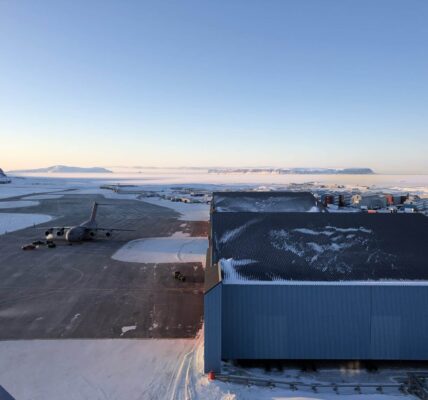
JL: Well, Finland is basically an island. We’re not physically an island, but we might as well be. We’re the northern corner of Europe and very dependent on sea lanes in the Baltic Sea for imports and exports. Over 96 percent goes through the Baltic Sea. So that’s the feet part of Finland standing firmly in the Baltic Sea region. And then, as you mentioned, our head, the northern parts of Finland, Lapland or the Arctic region, that’s the head part. And that’s located right next to Murmansk, which is where the Russian strategic nuclear weapons are located. It’s where the Russian Arctic fleet is located and some of their air forces as well, where they have been basically bombing Ukraine from a distance. So, it’s a very crucial location for Russia militarily but also economically because it’s the only open seaport location on the European side of Russia that is not surrounded by NATO states and constrained by NATO states. So, they have a large interest in the European Arctic commercially, economically, but also, crucially, militarily.
Now, where Finnish thinking has been developing is that we have historically focused on defensive terms on our southeastern border, which is right next to St. Petersburg—which is important for the Russians—but also the southern part of Finland is where most of the Finnish population and major cities and towns are located, so it makes sense to focus your defense capabilities and resources in the south.
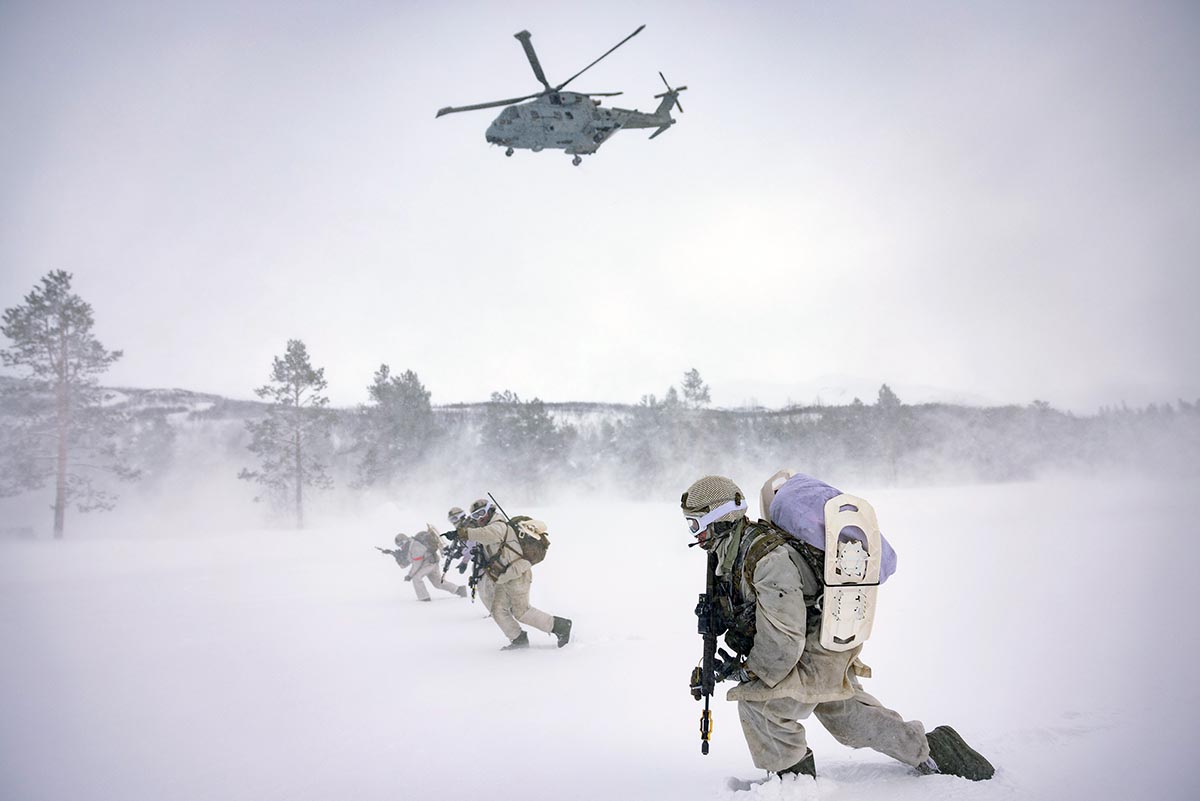
But increasingly, we’re now building a NATO Allied presence in the Finnish Lapland in the Arctic that will be led by Sweden, our neighbor—who of course had a joint interest in trying to balance Russian power in the north—also joined by Norway and some other European states. Even Italy has promised to somehow be present there, which is nice to have Italian friends from the south practicing winter warfare in Finnish Lapland and whatnot.
But maybe I’ll just end by noting that when you think about the Arctic and NATO, the crucial development is that NATO hasn’t historically had an Arctic strategy.
And Russia has been able to build a preponderance of power in the Arctic, military power in the Arctic, and that is a direct threat to NATO’s security of supply lines in the North Atlantic in a crisis or a conflict between Russia and NATO or some NATO countries. Now this is changing, and NATO is actively discussing whether to have an Arctic strategy that would be nice and how to respond to that situation.
Countries like Norway—Norway historically has been the northernmost NATO member, if you discount Greenland as part of the Kingdom of Denmark and of course Iceland. They have had this policy of deterrence and reassurance towards the Soviet Union during the Cold War. So, you try to deter, you make sure that the Russians know you will push back if necessary, but you also try not to provoke the Russians and keep the Arctic region out of high power tensions and escalations. But that no longer works. Now that Finland and Sweden are also in NATO, Norway is also no longer able to alone decide how NATO presents in the Arctic region, at least [how] the European Arctic part of it will look like. So, there will be more cooperation between the Nordic countries on what type of NATO presence we want to have in this part of the Arctic.
NK: Definitely. Generally, in your view, beyond the Arctic, what do you think is Finland’s greatest capacity or competency that it’s bringing into the Alliance that its Allies can utilize or learn from?
JL: I’ll begin by noting that Finland has prepared historically to defend itself on its own against a great power, Russia, if needed. So, we have a wide variety of capabilities in basically all military domains from land forces to air forces and even our Navy in the Baltic Sea. But we are still a very land-domain-heavy country. We have a conscription system. We have a reserve of about 900,000 soldiers for wartime if needed. And that’s quite a lot for a country of 5.6 million. I would just note.
NK: Indeed.
JL: Exactly. And we’re currently actually increasing the reserve to one million persons. So, we’re even making more investments as well. And we have the largest artillery in Europe, or at least one of the largest artilleries in Europe.
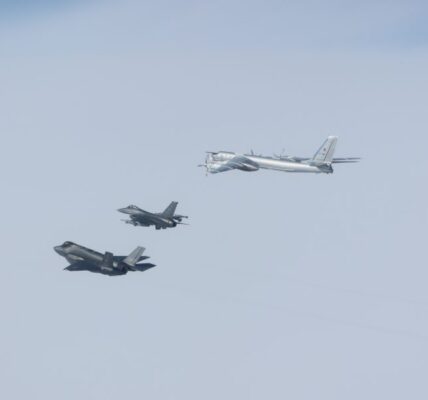
On the Air Force side, actually the US-Finnish Defense Corporation in the ‘90s, after the end of the Cold War, started or kicked off with material corporations. So Finland was buying fighter jets from the United States, and that started our new phase in the Defense Corporation and slowly led us to the path to become a NATO partner and now a NATO member. Now we’re buying F-35 jets, 64 F-35 jets from the US. The first one was actually just released off the factory production line in the States, and our president was also there to greet that. So, we have quite modern capabilities.
Then on the societal side of things, we’re quite a resilient country. We have this model of comprehensive security where we try to make sure that companies and citizens know how to act and what to do in a crisis or a conflict, what their role will be and what their responsibilities will be, because as a small country, you need to focus your resources on the defense forces, and that means that civilians will have more responsibilities for their own security and day-to-day resilience.
And finally, on the economic and technology side of things, as you might know, we just recently made a deal with the United States on building, I think it was seven icebreakers, maybe it was even more, partially in Finland and partially in the United States. So that’s technology know-how that we’re bringing to the table.
Nokia is no longer making cell phones, but they’re one of the largest 5G and 6G network providers in the world, and they’re very closely working with US companies and the US government. That’s, of course, quite crucial for security these days, making sure that you have efficient and secure networks for all your military hardware as well. And then we have other high-tech know-how, such as the quantum computing company IQM is one of the largest satellite companies in the defense sector these days. It’s a Finnish-Polish startup as well.
NK: You mentioned societal resilience and preparedness and how crisis awareness and preparedness is such an integral part of Finnish society. I think one of my favorite aspects of this project and this podcast was really thinking about how each country’s society works and thinks and how that helps us understand its foreign and security policy.
JL: Yeah.
NK: So I think in the US, one of the most well-known Nordic phrases that has entered the mainstream is hygge, which is, of course, Danish. But I recently learned a new phrase, which is Finnish, which is a bit more applicable to this topic of conversation, and that is sisu.
Can you maybe tell us a little bit more about this concept of sisu, what it means to Finns, and perhaps why it’s suddenly coming up in general conversations about European resolve in the face of all of these ongoing crises on the continent?
JL: Sisu is a Finnish word which basically means resilience, going through dark and tough times, just pushing through impossible odds, against impossible odds, and trying to make the best out of it. That’s the Finnish sentiment and historical perspective on things: that you have to make do with what you have. In the long arc of things, I think we have been quite successful as a small country and society and an economy in the world.
Of course, another Finnish word that might be crucial to understand is sauna, and especially maybe sauna diplomacy, because that’s the soft power side of things for Finland. Almost every Finnish embassy around the world, including the one in D.C., has a sauna, and maybe even a sauna society where you try to make sure that people can enjoy the Finnish culture. And a lot of Finnish high-stakes diplomacy has historically happened in the sauna, including with the Soviet leaders during the height of the Cold War. So that’s where many deals, including on Finnish security, were made.
NK: Of course, changing the way people think about their own security, how they think about their history and their identity, that perhaps takes time. But what lessons do you think other NATO members could learn from Finland’s approach towards endurance, resilience, and just general attitudes historically towards Russia?
JL: Well, I would say that trust, societal trust plays a key part in the Finnish model and to build trust amongst citizens, amongst political parties from the left to the right when it comes to security and defense—not on every issue, but the crucial national security issues—among companies that might be competing in other settings or in other contexts, and between companies and the government. That takes a lot of time and effort, and the sooner you start, the better. You need to make a very conscious effort to make sure that every part of the society understands why there is a need to cooperate when it comes to certain national security issues, rather than seeing each other as competitors or anything like that.
Just as an example, we have a National Emergency Supply Agency, NESA, and they’re responsible for coordinating Finnish preparedness for crises, national emergencies or conflicts, including, for example, during COVID times, they were very a key part of the Finnish government. And under NESA, there are these pools that are divided between different commercial sectors. There’s a pool for energy, there’s a pool for logistics, and so on and so forth. In these pools, you have all the key companies that are operating in those sectors. They’re sharing information amongst themselves, how they’re preparing and thinking about different contingencies, but also with the government. And because they’re talking amongst each other, there is less need for the government to actually regulate how these companies prepare for crises or conflicts because they know that they are prepared in any case, and they know that they are responsible actors if there is a need for them to, for example, shift production lines from commercial products to defense-related products or whatever is needed at the time.
So, I think that’s a key lesson from the Finnish system that you can’t copy. You can’t take the entire system and transplant it elsewhere in Europe or in the United States, but it all begins with trust and then you can build on top of that, but it takes time to do that.
NK: Certainly some of my guests from the Latvia episode echoed this sentiment and cited Finland as an example of both a model and an inspiration.
So, turning to our last question here, which is also my favorite question that I’ve been asking all of our guests on this season: What would you like American audiences to know about Finland’s contributions to NATO and why it is so important to support alliances like NATO going forward?
JL: Well, maybe I would say a couple of things. Firstly, regardless of all the noise that is happening in international politics and on international media and uncertainty over the direction of the Trump administration, Finns deeply appreciate the American contribution to European security and to NATO. And we like Americans here. I don’t think that’s going to change, even though there will be, of course, question marks about Trump’s commitment to European security.
And secondly, from the American perspective, I’ve often thought that it makes sense for American policymakers and the US government to want to shift their attention and resources to the Indo-Pacific and to China.
But historically speaking, the US completely cutting itself off from Europe or trying to ignore Europe hasn’t ended very well because it has always ended up pulling America back in at a worse moment and a higher cost for for the United States’ own security because the balance of power in Europe has been so dependent on the US contribution. I don’t think that has actually changed. So I will just conclude by saying that what I would like to happen is for us in Europe to take more responsibility for our own security and our own defense so that the United States can focus on the priorities that the US has, but without abandoning Europe at a cost that would be higher for America in the future.
NK: Definitely. Well, thank you so much for sharing your insights with us today. I certainly learned a lot. And thank you for joining us today on The Ties that Bind.
JL: That’s very kind of you. Thank you for having me.
Image: Aviation engineering personnel and reservists keep the equipment airworthy and in the required condition at the Hiirola road base. (Facebook | Ilmavoimat – Flygvapnet – Finnish Air Force | Karjalan lennosto/viestintävarusmies Tiihonen)