As China’s presence in the Arctic expands across scientific and security dimensions, understanding patterns in China’s global engagement is vital. An examination of China’s strategies, potentially informed by historical diplomatic philosophies such as the tributary system,1) reveals important patterns. This system used economic exchange with neighbouring states to manage hierarchical relationships and assert influence, offering valuable indicators for anticipating China’s Arctic future and ambitions.
Notably, China capitalizes on perceived gaps in partnerships left by traditional powers, including the United States, to expand influence via economic statecraft. This has been demonstrated powerfully in Pakistan, an example which provides a crucial lens through which to analyze potential trajectories in the Arctic. While not a direct blueprint, this pattern reveals an adaptable strategic logic that may resonate with Arctic actors, including Greenland, who seek economic development and greater autonomy, particularly if they perceive waning engagement from well-established partners.
The Pakistan Precedent: China’s Economic Statecraft Filling a Void
Shifts in US engagement with Pakistan illustrate this dynamic. While the US provided significant aid post-9/11,2) its relations with Pakistan fluctuated. The US reduced aid levels, particularly when the Trump administration reduced security assistance starting in 2018, citing concerns over Pakistan’s counterterrorism efforts.3)
This period coincided with the formal launch and expansion of the China-Pakistan Economic Corridor (CPEC)4) in 2015, a flagship project of China’s Belt and Road Initiative (BRI)5) currently valued around $62 billion.
CPEC encompasses massive infrastructure development,6) including power plants, highways, railways, and the strategic Gwadar port, aiming to connect China’s Xinjiang region with the Arabian Sea through Pakistan.
China’s significant investment promised economic uplift for Pakistan but also deepened its economic reliance on Beijing. This reliance raised serious concerns about debt sustainability.7) By 2024, nearly 22 percent of Pakistan’s external debt was owed to China, much of it linked to CPEC.8)
China’s strategy thus creates an asymmetrical symbiosis: while Pakistan gains infrastructure, occasionally of uncertain purpose,9) and a strategic partner, China gains access to the Indian Ocean, expands its regional influence, and promotes the BRI model. The perceived reduction in a consistent US partnership with Pakistan appeared to create space for China’s economic statecraft to flourish within the existing Sino-Pakistani relationship.
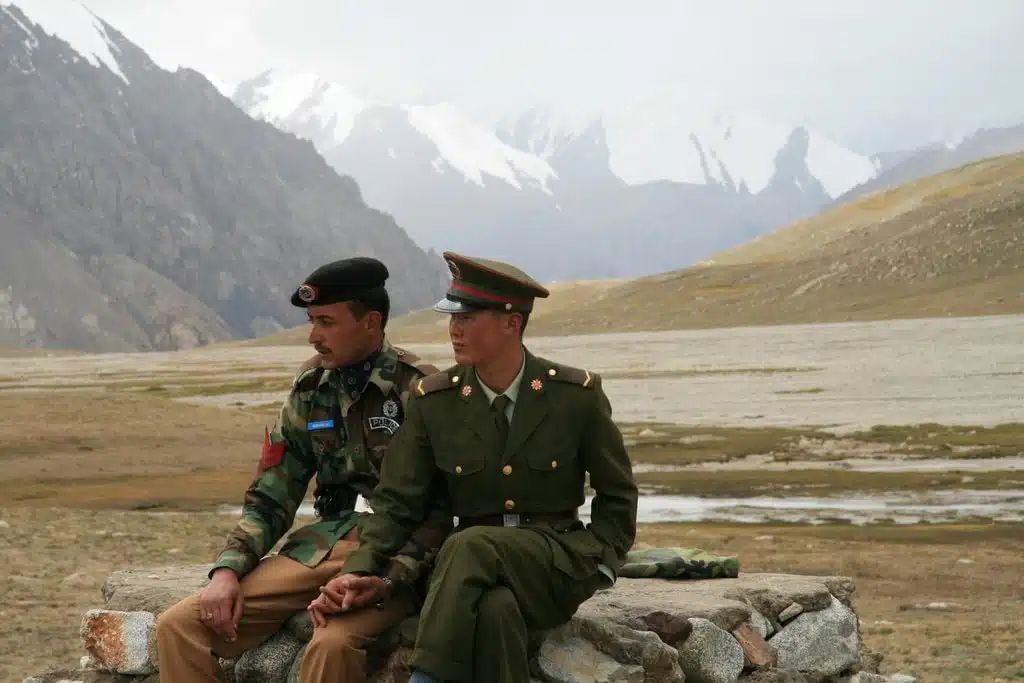
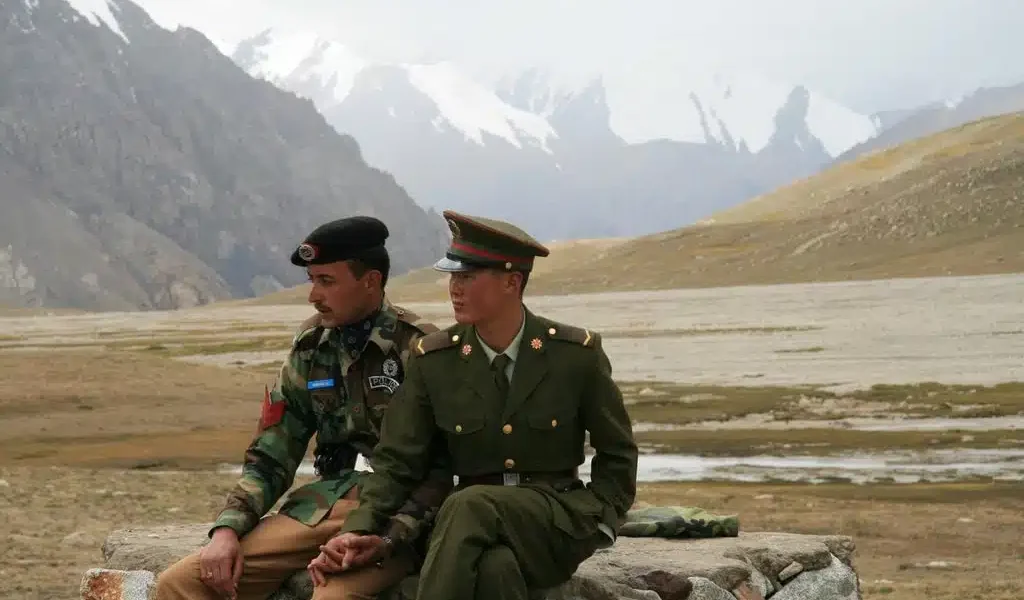
In this dynamic, China leverages its economic ties with another country for better strategic positioning. The use of this strategy echoes aspects of historical precedents like the tributary system, in which economic exchange, though different in form from modern debt financing, was central to establishing relationships and affirming China’s global status.
Thus, some scholars explicitly analyze the BRI as a potential “neo-tribute system,”10) focusing on its entwined economic and symbolic dimensions aimed at enhancing the Chinese state’s legitimacy.
Within this framework, a partner state such as Pakistan provides modern-day ‘tribute’ not through symbolic goods or the act of kowtowing, but through tangible strategic assets such as preferential access for Chinese firms, political alignment on the world stage, and the aforementioned Gwadar port. In return, China bestows the ‘imperial gift’ of massive infrastructure loans and projects that, while promising development, simultaneously solidify a creditor-debtor dynamic in pursuit of a poorly-defined shared destiny. As a result, Beijing’s centrality is reinforced, echoing the core logic of the tributary system, with China as price-maker and over 140 countries as potential price-takers under the rhetoric of empowering largesse.11)
China’s Arctic Gambit: Adapting the Playbook
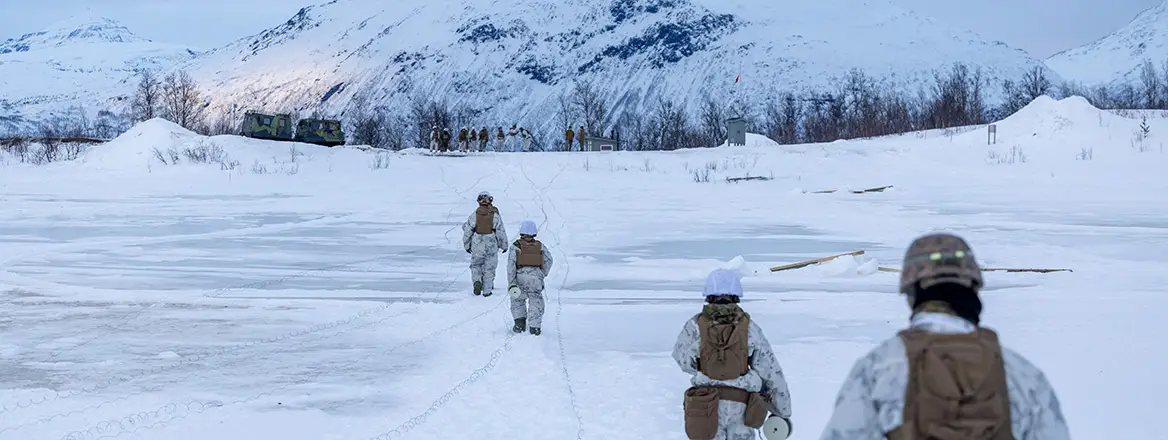
In the Arctic, China’s strategy includes pursuing scientific research12) (e.g., the Yellow River Station in Svalbard, Xue Long icebreaker expeditions), seeking opportunities for resource extraction (often in partnership with Russia),13) promoting the Polar Silk Road14) and asserting diplomatic interests as a self-declared “Near-Arctic State.”
China’s significant scientific investment in the Arctic functions as strategic infrastructure by establishing a presence, gathering environmental and resource data potentially useful for primary surveillance radar navigation and resource exploitation, building partnerships with other countries, and thereby legitimizing its claims for a greater role in regional governance.
While China emphasizes cooperation, its Arctic activities face Western scrutiny. Western concerns focus on the potential military applications of China’s dual-use research and infrastructure (e.g., satellite ground stations, research facilities) and deepening security cooperation with Russia, particularly after Russia’s increased isolation post-2022.15) This Sino-Russian partnership is crucial for China, as it provides access (including the Northern Sea Route) and resource opportunities, particularly in energy.
However, this reliance on Russia fuels Western anxieties and ties China’s Arctic prospects to Russia’s volatile international standing, complicating relations with other Arctic states.
Greenland: An Arctic Test Case?
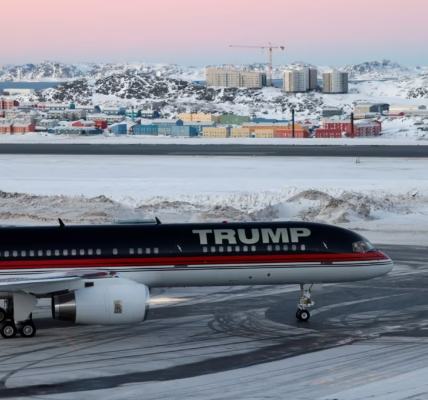
Greenland presents a scenario with potential parallels to China’s relationship with Pakistan, albeit with some distinctions. Greenland is strategically located, rich in resources such as rare earth elements, and seeking greater economic independence from Denmark. Could perceived inconsistent support or engagement from Western partners like the US16) and Denmark create an environment where Greenland finds Chinese investment more appealing?
Past incidents illustrate how political discourse can cultivate uncertainty,17) such as US rhetoric about purchasing Greenland, later replaced by renewed engagement, including a reopened consulate in Nuuk and aid packages.
However, the differences between Greenland and Pakistan are profound. Greenland is a part of the Kingdom of Denmark, a member of NATO, and thus entitled to NATO protection. The Arctic possesses unique governance structures (such as the Arctic Council) and heightened environmental sensitivities. Furthermore, China faces established Arctic states wary of its long-term intentions, and past Chinese bids for critical Arctic infrastructure, including airports, have faced pushback due to security concerns.18) A CPEC-style scenario of Chinese investment in Greenland seems unlikely, as far as depth of involvement and potential for perceived or actual reliance on China.
Instead, any Greenlandic interest in Chinese investment might represent a strategic hedging tactic – exploring options for Greenland to gain leverage with Copenhagen and Washington to pursue development goals – rather than a fundamental shift away from traditional partners.19) China could aim its narrative of “win-win” cooperation to appeal to these aspirations, while seeking economic opportunities in Greenland amidst Western security vigilance.
Conclusion: Lessons for Arctic Engagement
While the Arctic context differs significantly from South Asia, China’s involvement with Pakistan illuminates one element of China’s strategic playbook: exploiting a country’s perceived gaps in engagement from traditional powers to engage in economic statecraft through investment. This underscores how crucial it is for Western Arctic states, particularly the US and Denmark concerning Greenland, to maintain consistent, respectful engagement that addresses local economic priorities and aspirations for autonomy.
Western states’ failure to maintain robust partnerships risks inadvertently creating openings for China’s influence model, even within existing alliances. Effectively navigating the Arctic’s complex future requires a nuanced understanding of the historical echoes and contemporary applications driving China’s global strategy. Western states should therefore foster regional stability through sustained partnership and cooperation on shared challenges such as climate change, while remaining vigilant about the evolving geopolitical and security landscape shaped by Great Power Competition and the Sino-Russian axis.
References
| ↑1 | Hevia JL (2016) Tributary systems. The Wiley‐Blackwell Encyclopedia of Globalization. John Wiley & Sons: Wiley-Blackwell |
|---|---|
| ↑2 | Congressional Research Service (2023) Pakistan and U.S.-Pakistan Relations. R47565. https://www.congress.gov/crs-product/R47565. Accessed on May 9, 2025 |
| ↑3 | Kugelman M (2025) Trump’s $397 Million Exception for Pakistan. Foreign Policy, 25 April, https://foreignpolicy.com/2025/04/25/trump-us-pakistan-funding-foreign-aid/. Accessed on 15 May 2025 |
| ↑4 | Zhang H & Malik AA (2024) Fulfilling Promises for the China-Pakistan Economic Corridor. Georgetown Journal of International Affairs (GJIA), 16 December 2024, https://gjia.georgetown.edu/2024/12/16/13728. Accessed on 12 May 2025 |
| ↑5 | Lamazhapov E, Stensland I and Heggelund G (2023) China’s Polar Silk Road: Long Game or Failed Strategy?, The Arctic Institute, 14 November, https://www.thearcticinstitute.org/china-polar-silk-road-long-game-failed-strategy/. Accessed on 11 May 2025 |
| ↑6 | Cobbinah J (2025) China-Pakistan Economic Corridor: A Study of Chinese Investment in Pakistan. International Journal for Multidisciplinary Research 7(1): 34644. https://www.ijfmr.com/papers/2025/1/34644.pdf. Accessed on May 11, 2025 |
| ↑7 | Peshimam GN (2023) U.S. concerned about debt Pakistan owes China, official says. Reuters, 16 February 2023, https://www.reuters.com/world/asia-pacific/us-concerned-about-debt-pakistan-owes-china-official-says-2023-02-16/. Accessed on 19 May 2025 |
| ↑8 | Shahid A (2025) China rolls over $2 billion loan to Pakistan. Reuters, 8 March 2025, https://www.reuters.com/world/asia-pacific/china-rolls-over-2-billion-loan-pakistan-2025-03-08/. Accessed on 19 May 2025 |
| ↑9 | Butt R (2025) No passengers, no planes, no benefits. Pakistan’s newest airport is a bit of a mystery. AP News, 23 February 2025, https://apnews.com/article/pakistan-china-gwadar-airport-balochistan-militants-81ecfc16827015321183a1f5a52e631d. Accessed on 19 May 2025 |
| ↑10 | Hobson J & Zhang S (2022) The Return of the Chinese Tribute System? Re-viewing the Belt and Road Initiative. Global Studies Quarterly, 30 December 2022, https://academic.oup.com/isagsq/article/2/4/ksac074/6965802. Accessed on 19 May 2025 |
| ↑11 | Curtis S & Klaus I (2024) The Belt and Road City: Geopolitics, Urbanization, and China’s Search for a New International Order. New Haven: Yale University Press |
| ↑12 | Pezard S et al. (2025) China’s Economic, Scientific, and Information Activities in the Arctic. RAND Corporation, 23 January 2025, https://www.rand.org/content/dam/rand/pubs/research_reports/RRA2800/RRA2823-1/RAND_RRA2823-1.pdf. Accessed on 12 May 2025 |
| ↑13 | Sørensen CTN & Klimenko E (2017) Emerging Chinese–Russian Cooperation in the Arctic. SIPRI. https://www.sipri.org/sites/default/files/2017-06/emerging-chinese-russian-cooperation-arctic.pdf. Accessed on May 12, 2025 |
| ↑14 | State Council Information Office of the PRC (2018) China’s Arctic Policy. http://english.scio.gov.cn/2018-01/26/content_50313403.htm. Accessed on May 12, 2025 |
| ↑15 | Andersson P (2024) Sino-Russian Cooperation in the Arctic: Implications for Nordic Countries and Recommended Policy Responses. Swedish Institute of International Affairs, Swedish National China Centre. https://www.ui.se/globalassets/ui.se-eng/publications/other-publications/sino-russian-cooperation-in-the-arctic_implications-for-nordic-countries-and-recommended-policy-responses.pdf. Accessed on May 12, 2025 |
| ↑16 | Olesen MR (2021) Getting by in a Troubled Arctic: The Kingdom of Denmark and the Great Powers. International Centre for Defence and Security (ICDS). https://icds.ee/en/getting-by-in-a-troubled-arctic-the-kingdom-of-denmark-and-the-great-powers/. Accessed on May 12, 2025 |
| ↑17 | Kofod J (2025) To safeguard the Arctic, Trump should work with Denmark and Greenland. Atlantic Council, 11 February 2025, https://www.atlanticcouncil.org/blogs/new-atlanticist/to-safeguard-the-arctic-trump-should-work-with-denmark-and-greenland/. Accessed on 12 May 2025 |
| ↑18 | Spence J, Hanlon E (2025) Explainer: The Geopolitical Significance of Greenland. Belfer Center, 16 January 2025, https://www.belfercenter.org/research-analysis/explainer-geopolitical-significance-greenland. Accessed on 19 May 2025 |
| ↑19 | Andersson P (2025) China already left – so what is Trump’s Greenland gambit about? Swedish National China Centre, 17 January, https://kinacentrum.se/en/publications/china-already-left-so-what-is-trumps-greenland-gambit-about/. Accessed on 13 May 2025 |
Source – https://www.thearcticinstitute.org/indus-ice-china-pakistan-lessons-arctic-engagement/