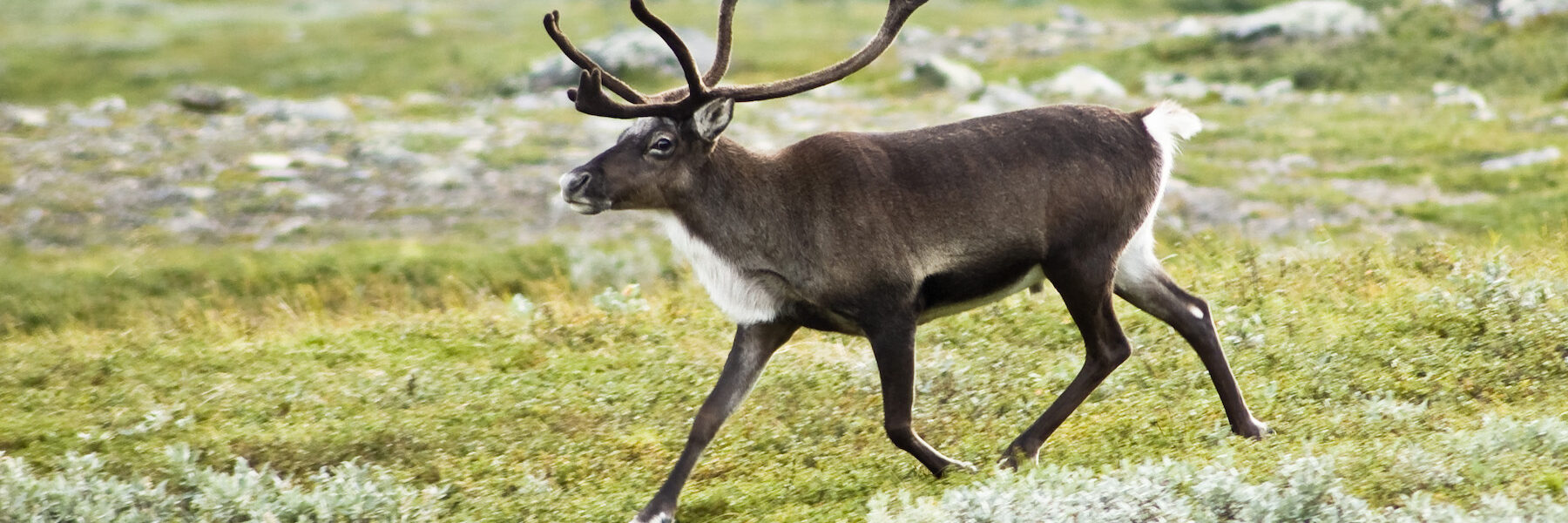
Global reindeer populations could fall by more than half by 2100 due to the impacts of climate change, including the shrinking of their habitats, according to a recent study, Mongabay’s Sonam Lama Hyolmo reports.
Reindeer (Rangifer tarandus), known in North America as caribou, live only in frozen tundra and boreal forests near the Arctic, and are estimated at 2.4 million individuals today. Following a 40% decline in their numbers over three generations, the IUCN, the global wildlife conservation authority, listed the species as vulnerable in 2016.
The new study says the global reindeer population could drop by a further 58% by 2100 in a business-as-usual, high-emissions climate scenario, with the species’ range shrinking by an estimated 46%.
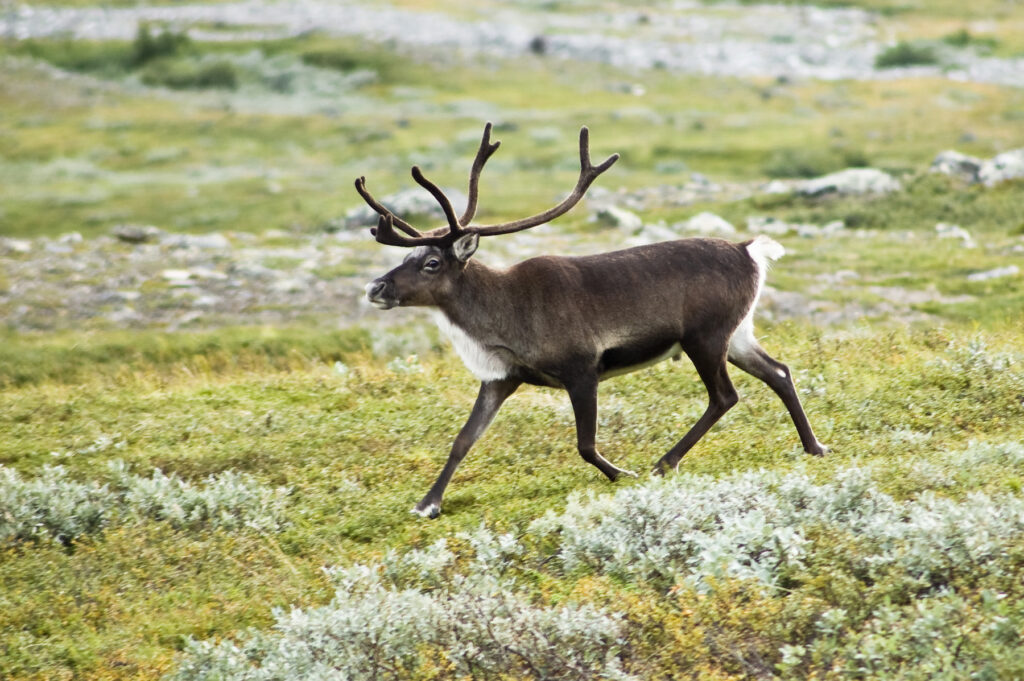
In July 2025, several reindeer deaths were reported during a heat wave in Norway, Sweden and Finland that broke several temperature records. Locals also spotted reindeer in local towns, searching for water and refuge from the heat and insects. Researchers found that human-induced climate change made the heat wave at least 10 times more likely and 2° Celsius (3.6° Fahrenheit) hotter.
In Finland, the Indigenous Sámi people, the only recognized Indigenous people in the European Union, told Hyolmo that the heat wave was made worse by logging of old-growth forests and NATO military expansion in the northern part of the nation. The grazing lands for their semidomesticated reindeer herds are shrinking.
“When forests are logged, the tree-hanging lichen, the primary winter food of reindeer, is lost,” Osmo Seurujärvi, a Sámi herder in Inari, northern Finland, told Hyolmo. “This also affects the ground lichens that do not grow back once the moisture of the ground changes after logging.”
In 2009, Finland’s reindeer herders signed a moratorium with a large state-owned logging company to preserve space for reindeer herds. That moratorium ends in 2029, and some leaders are calling it to be made permanent.
“The logging moratorium should be solidified, so that it’s not temporary and continues to provide food and help reindeer thrive sustainably,” said Pauliina Feodoroff, the former president of the Sámi council.
Sámi traditional land stewardship combined with scientific research, she said, need to play a bigger role in land governance and conservation efforts to protect reindeer.
One of these efforts involves the creation of ecological corridors, so that the land still available for traditional reindeer herds remains connected. Such corridors are important for reindeer breeding, food abundance and genetic diversity.
“When the amount of usable or herding land for the species is shrunk and the patches get too separated, the species might not be able to move around or connect with other populations,” said study co-author Elisabetta Canteri, a researcher at the University of Copenhagen’s Globe Institute.
Read the full story by Sonam Lama Hyolmo here.