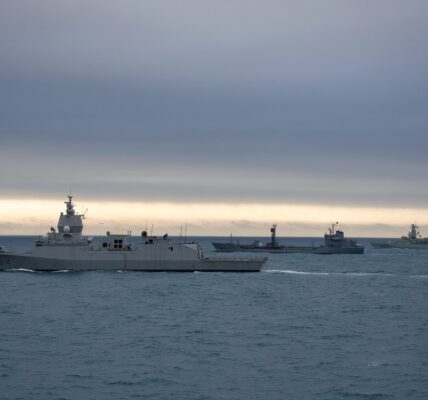
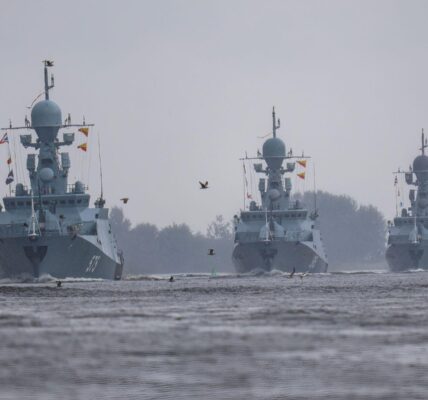
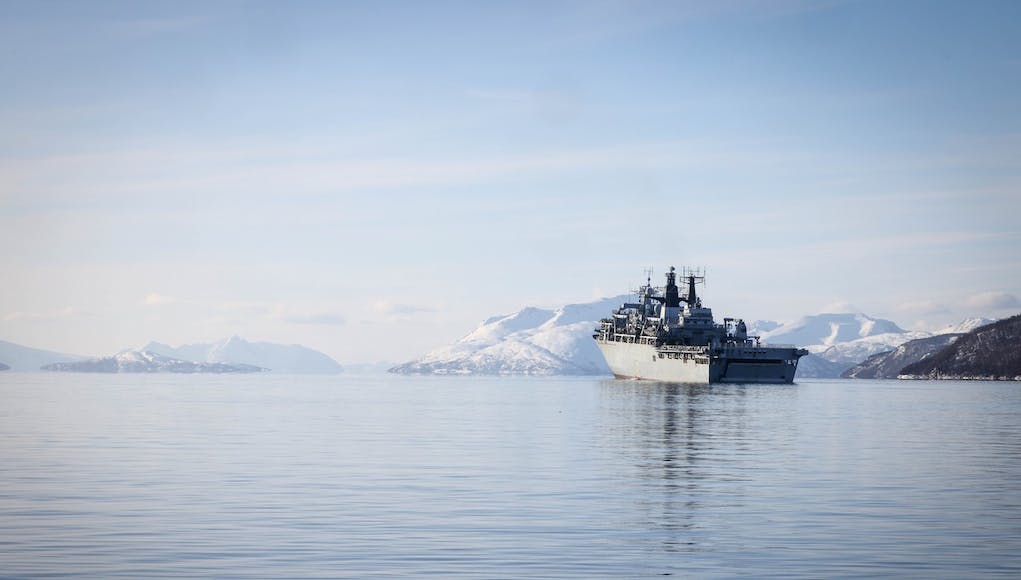
As reported by The Globe and Mail on March 6, Canada and Japan signed a new strategic partnership that includes expanded defense cooperation and the possibility of joint military training in the Canadian Arctic. During a visit to Tokyo, Canadian Prime Minister Mark Carney and Japanese Prime Minister Sanae Takaichi agreed to increase naval collaboration and joint exercises, including the possibility for full participation in Canada’s Operation NANOOK, the country’s primary Arctic sovereignty and military training exercise. The partnership also includes memoranda on Coast Guard cooperation, emergency response, and action against illegal fishing in the North Pacific. (The Globe and Mail)
Since becoming an Arctic Council observer in 2013, Japan has gradually built an Arctic presence centered on research, international cooperation, and sustainability. At the same time, its approach is becoming more concrete and capacity-based. Japan is currently constructing its first icebreaking vessel dedicated entirely to Arctic research, the Mirai II, scheduled for delivery in November 2026. At the same time, Japanese diplomats have remained active in Arctic fora, reinforcing the country’s reputation as a committed non-Arctic stakeholder. Japan has also repeatedly participated as an observer in Canada’s Operation NANOOK exercises but is now considering fuller involvement, signaling a more practical security presence in the region.
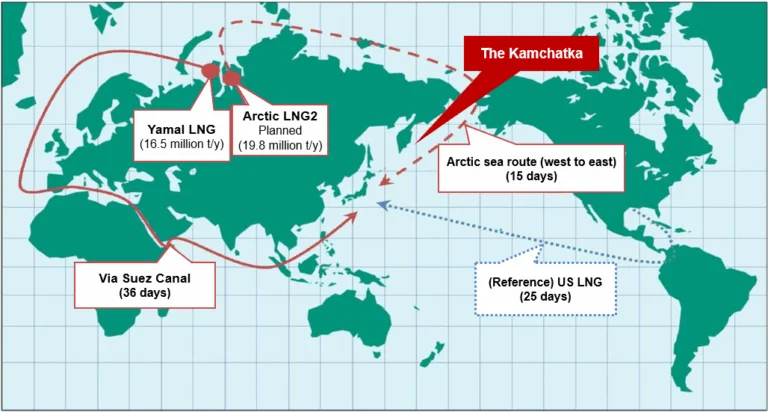
This evolution is notable given Japan’s longstanding pacifist security posture and limited military engagement. Increased participation in Arctic training exercises therefore suggests a cautious but meaningful broadening of Japan’s traditionally non-military international approach. While Japan’s Arctic engagement is still predominantly centered around scientific exploration, its closer defense cooperation with Canada illustrates how Arctic governance and security discussions are increasingly intersecting.
A wider consideration, in turn, is whether a stronger Japanese presence in the region could also sharpen China’s focus on the Arctic. Given the complex historical and political relationship between Japan and China, a more visible Japanese presence in Arctic security exercises could encourage China to maintain or expand its own involvement to avoid strategic disadvantage, illustrating the potential for global geopolitical rivalries gradually extending northward. (Arctic Today, The Arctic Institute, The Globe and Mail).
Source – https://www.thearcticinstitute.org/arctic-week-take-five-week-2-march-2026/