This year the Arctic Council marks 30 years of cooperation. Amid a complex international environment, meetings in Tromsø highlighted the Council’s legacy, as well as its continued relevance and capacity to deliver.
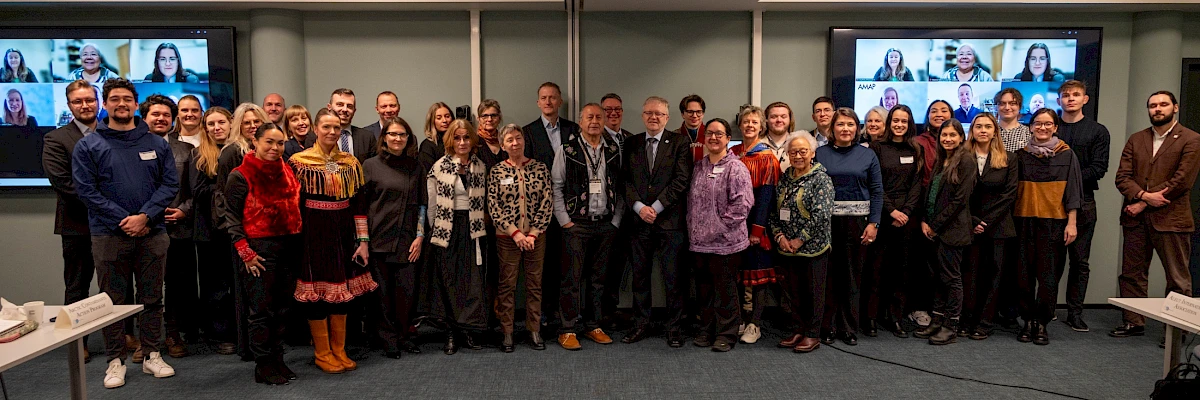
“The Arctic Council has developed into an indispensable forum not only for cooperation across the circumpolar North, but also for knowledge development, policy recommendations and concrete actions with real impacts in Arctic communities. The unique structure established 30 years ago, ensures that Indigenous Peoples are involved at every level, and that has been invaluable for the Council. During a time when all eyes are on the Arctic, the Arctic Council’s work is truly for the Arctic, by the Arctic,” Kenneth Høegh, Chair of the Arctic Council for the Kingdom of Denmark, said in his speech at the Arctic Council 30th anniversary reception hosted by the Kingdom of Denmark’s Chairship of the Arctic Council, held on the margins of the Arctic Frontiers Conference.

© Jessica Cook
Although the geopolitical situation presents challenges for the Arctic Council, all eight Arctic States and the six Permanent Participants continue to recognize the Arctic Council as the most important forum for circumpolar cooperation.
“I will always say that the greatest achievement of the Arctic Council is the cooperation itself between the States and Permanent Participants. The challenges and opportunities that we face in the Arctic today are many, and we are better off when we address them together”.
”The Kingdom of Denmark remains steadfast in its commitment to ensure the resilience of this Council so that it continues to serve as a crucial platform for cooperation and dialogue for the future of the Arctic,” Chair Kenneth Høegh, stressed in his speech.
Unique structure in international relations for Arctic
On the margins of the Arctic Frontiers Conference, the Chairship held several meetings with Working Groups, Permanent Participants and Observers. The work that is done today builds on long-standing foundations.
“For 30 years, the Indigenous Peoples have been the ones that have given the Arctic cooperation a human face. Without us, there would probably have been much more focus on polar bears and ice. With us at the table, everybody is always reminded that there are people living in the Arctic”.
“The awareness of People’s needs, challenges and opportunities have increasingly grown over these three decades. From asking for a seat at a table we are active contributors to the Arctic Council,” says Gunn-Britt Retter, Head of Delegation from the Saami Council.
According to her, the Arctic Council is unique compared to other international organizations.
“There are many international bodies where Indigenous Peoples are observers, but not Permanent Participants seated alongside States. So in that respect, the Arctic Council was unique in its creation, and the way it has developed has only strengthened that position.
We have a say and are actually listened to. I’m not sure we would have that same strong position at the decision-making table if the Council was created in today’s geopolitical context,” says Retter, and explains how the Permanent Participants work to ensure that Indigenous Peoples shape decisions in the Council.
“It is important for us, when carrying out projects, to ensure that Indigenous Knowledge is considered at an equal level with science, so that it informs decision-making. When our knowledge is reflected in assessments and reports presented at the ministerial level, it helps us build our arguments in political discussions. It strengthens our position within the Arctic Council and beyond,” she says.
“We have so much in common in the Arctic – the climate, the ocean, the Peoples. That shared reality is, in itself, why we should continue this cooperation into the future. The Indigenous Peoples have so much knowledge to contribute. We live on and know the land and the sea, and we make daily observations of nature loss, climate change, and pollution. These challenges will remain,” Retter said.
Active, relevant, and focused on delivering tangible results
Soffia Gudmundsdottir, Executive Secretary of the Protection of the Arctic Marine Environment Working Group (PAME) says the Arctic Council has become the backbone of Arctic scientific and environmental cooperation over the past three decades.
“Its greatest achievement has been building durable, trust-based collaboration among Arctic States, Indigenous Permanent Participants, and scientific experts across the entire region,” she says.
Through the Working Groups, the Council has delivered authoritative assessments of circumpolar and global significance on climate change, biodiversity, pollution, shipping, and emergency preparedness. These assessments have shaped national policies and directly informed international processes, including the International Maritime Organization, the UN climate process, and global biodiversity conventions.
According to Gudmundsdottir, recent outputs clearly demonstrate that the Arctic Council remains active, relevant, and focused on delivering tangible results.
“In my opinion, the operational output underscores the Council’s relevance. Tools such as the Arctic Ship Traffic Database provide decision-makers with reliable, shared data to assess risks, trends, and cumulative impacts associated with Arctic shipping. We continue to cooperate on emergency prevention, preparedness, and response that strengthens safety and resilience across the region. Throughout this work, Indigenous Knowledge is systematically integrated, ensuring that policies and solutions reflect Arctic realities,” she continues.
Resilience and adaptability
Despite the lack of in-person meetings, the Working Groups have demonstrated strong institutional resilience. They have adjusted and shifted to hybrid and virtual collaboration, and focused on maintaining scientific continuity through well-established Working Group structures, expert networks, and agreed mandates.
“We prioritize core scientific tasks, monitoring, and implementation activities, to ensure continuity in long-term datasets, assessments, and reporting that are critical for understanding Arctic change. We continue our close coordination with Permanent Participants, to support the integration of Indigenous Knowledge and ensure that work remains grounded in Arctic realities,” she says.
According to Gudmundsdottir, the Working Groups have ensured that the Arctic Council continues to function as a trusted platform for science-based collaboration.
“This adaptability reflects decades of trust, dedication and cooperation built within the Council. It enables the Council to remain effective and ready to scale up political engagement when conditions allow,” she says.
Source – https://arctic-council.org/news/kicking-off-30-years-of-arctic-council-cooperation/